Sunday, February 2, 2014

TOW #17: "Was standing ovation for women's pay just as fake as Don Draper?" by Maya L. Harris (via CNN.com)

     Recently, President Obama addressed the issue of gender inequality (specifically dealing with wages) at the State of the Union. His announcement that a "women deserves equal pay for equal work" was met with a standing ovation. However, in the opinion article "Was standing ovation for women's pay just as fake as Don Draper?", Maya L. Harris, a visiting scholar at Harvard Law School and a women's rights activist, argues that a standing ovation won't make change – action will. By passionately suggesting and thoroughly supporting ways to take action, Harris effectively conveys her desire for change through action and shows how America could be made a better place because of it.
     Harris follows up her statement that "Only action will [change the gender wage gap]" by proposes a way for Congress to start taking that action. She writes, "Congress can start by passing the Paycheck Fairness Act so that women can't get fired for asking their co-workers about their pay." She follows up this suggestion with reasons why that would be a good first step, citing Lilly Ledbetter, a women who had been part of a wage discrimination case and who is now a women's equality activist, as asking, "How will a women know she being paid less if she can't ask?" First, by giving a well-supported suggestion, Harris urges readers to understand the importance of the wage inequality issue. By showing that she has spent time researching the Paycheck Fairness Act and its effects, as well as finding the opinions of people who support it, Harris makes clear how important equality is to her. This passion to solve the problem that Harris expresses attempts to make readers feel the same way. Harris continues to give suggestions and provide inspiring messages, writing, "When we lift women, we lift America." Ultimately, by vehemently presenting her ideas about the wage gap, Harris effectively convinces readers that this issue should be important to everyone. Her well-supported suggestions then show that the only way to bring about that change is through action.
     In "Was standing ovation for women's pay just as fake as Don Draper?", Maya L. Harris states that the only way to bring about equal pay is to actually do something. She argues that standing ovations will not help – action will. By presenting well-supported suggestions with a passionate tone, Harris effectively conveys her desire for change and then urges readers to understand that importance so they can make change happen and ultimately make America a better place.
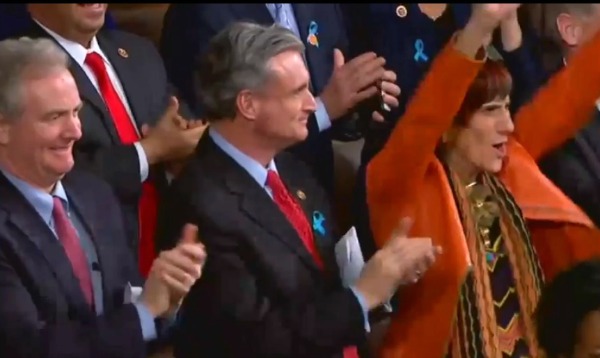
Standing Ovation at State of the Union:
Obama's announcement of support for equal pay resulted in a standing ovation. But, as Harris argues, that standing ovation isn't what will bring about change. If we truly want to make a difference, we need to take action.

Monday, January 20, 2014

TOW #16: "The 25 Best Inventions of the Year" (via TIME Magazine)

     In the November 25th, 2013 issue of TIME Magazine, authors Charlotte Alter, Cleo Brock-Abraham, Lev Grossman, Andrew Katz, Denver Nicks, Alice Park, Jessica Roy, Katy Steinmetz, Mark Thompson, Bryan Walsh, and Christopher Wilson compiled a list entitled "The 25 Best Inventions of the Year". Written for an audience of literally all ages – the list format allowed for readers of all ages to comprehend the article – this list strives simply to inform the American public of twenty-five interesting inventions of 2013, ranging from fun ideas like driverless toy race cars to amazingly innovative and impactful inventions like the Rewalk, which can allow paraplegics to stand and even walk. Through its sensible and attention-grabbing arrangement, "The 25 Best Inventions of the Year" effectively teaches readers about its titular products.
     The article is arranged from the most "fun" inventions to the most "useful". It begins with simple things, described as "widely entertaining" that the average reader could possibly own, like the Sony Smart Lens, which fits onto smart phones to give the consumer high-quality photos with relative ease. By first introducing simple yet exciting inventions, the article successfully intrigues readers enough to continue reading – these "everyday" inventions could affect the readers' lives, and are therefore very interesting to the average audience member. Once the article has the readers' attention, it moves towards products that probably don't directly affect the average person, such as "world-changing" Argus II, which is able to "restore partial vision to those who have severe retinitis pigmentosa, which can lead to blindness." While the average person (especially one who is reading this particular article) is almost certainly not blind, they may know someone who is, and who could be positively affected by this invention. Regardless, the introduction of consumer-friendly inventions first and then a slow build-up to more life-changing ideas allowed for the article to keep readers entertained even as the successive innovations began to stop applying to their everyday lives. This logical arrangement kept readers entertained throughout the article and therefore successfully achieved the authors' purpose of informing their audience of great new inventions of 2013.
     Through the use of a sensible yet entertaining arrangement, the authors of "The 25 Best Inventions of the Year" effectively entranced readers throughout the entire article. By beginning with products that could directly affect their audience and moving out to a larger scale, the authors kept their audience intrigued to the very end, which ultimately allowed for a successful transfer of information about the inventions from the article to the readers.

The 3Doodler:
One of the inventions in the middle of the article was the 3Doodler, a pen that effectively acts as a handheld 3D printer, allowing the user to draw in three dimensions.

Sunday, January 12, 2014

TOW #15: Dreamland by David K. Randall (IRB)

     Dreamland is a comprehensive informational book about the science of sleep, written by David K. Randall who, while not a certified sleep expert, has suffered from sleep problems for much of his life and has devoted the past few years to researching sleep to write this book. Dreamland was written with the average American in mind, and Randall does a great job of making it simple enough to understand, yet detailed enough to be extremely informative. To do so, he writes about various sleep disorders as well as the ideal way to get a good night's sleep and uses scenarios that the average American can relate to and therefore understand. Through this familiarity, Randall is able to achieve his purpose of informing the public about sleep.
     Chapter 9 of Dreamland (titled "Game Time") focuses on circadian rhythms. Since that phrase likely means very little to anyone who has not recently completed a biology course, Randall begins by talking about Monday Night Football, something that the average American certainly knows. Randall then discusses how East Coast teams often lose to supposed evenly-matched West Coast teams. This, again, is something many East Coast fans can relate with, which allows them to become further interested in this chapter of Dreamland. Finally, once Randall has his readers' attention, he incorporates the new idea of circadian rhythms. These, he writes, are the reason why East Coast teams often do poorly against western teams – they're playing football at times that their internal body clocks would rather be sleeping. By first introducing a scenario that many readers will understand and be interested in, Randall ensures that he has his audience's attention and their interest in how he could connect the topic to sleep. From there, Randall launches into interesting explanations that often include more scenarios in order for readers to continue to connect with the text. This combination of interest and comprehensive explanation ultimately allows readers to learn about many aspects of sleep.
     Randall employs many rhetorical strategies in Dreamland, including appeals to logos, as discussed in a previous TOW. However, as the book continues into more complicated topics, he often uses relatable scenarios to give readers a better understanding of sleep. Ultimately, Randall's use of situations his audience can connect to allows for readers to come away from Dreamland as people far more educated about sleep than they were when they started.

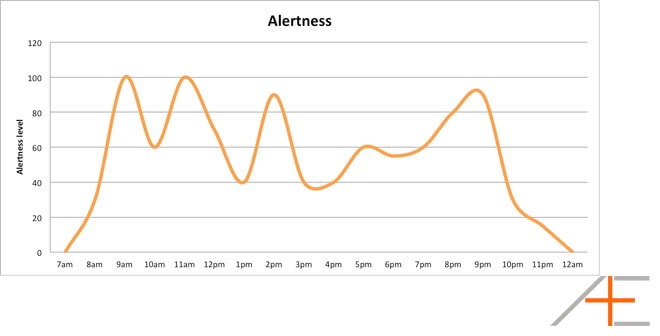
Circadian Rhythm:
As Randall discusses, knowing the circadian rhythm is vital to getting the most out of one's day. Trying to do important work during dips in energy is often very unproductive, as many eastern football players have experienced.

Sunday, January 5, 2014

TOW #14: "Stranger Danger" by Misha Collins (Visual Text)

     Misha Collins, an actor and published poet, wrote and directed the video short "Stranger Danger". It is about just that: the danger of strangers. The video features a young girl skipping down a neighborhood street who ultimately enters a suspicious-looking white van. Through this video, Collins conveys the message to his audience – virtually anyone – that one should not judge the safety of others based solely on their appearance. To achieve this, Collins uses irony.
     The video begins by following a young girl as she walks down a neighborhood street, presumably after getting off of the school bus. From the outset, the viewer trusts this girl, who is dressed in pink and seems cheerful and altogether normal. She waves to her neighbors and smells the flowers by the sidewalk. Then, the video cuts to a shot from the inside of a vehicle, in which a man is smoking and looking at the little girl. The man begins to drive slowly behind the girl, and viewers begin to think of him as a predator – they immediately distrust him. The van stops near the little girl, and she looks inside at a Barbie doll. Seemingly trusting the vehicle, she heads towards the side doors. At this point, viewers become very worried for the innocent girl. The man throws the doors open, and, much to the viewers' surprise, the little girl sprouts fangs and leaps at the man, sinking her teeth into him. This alarming twist causes watchers to reconsider how they perceived the people in the video. The man may not have had good intentions, but not once did they consider that the seemingly innocent little girl would have evil intentions as well. Through his use of irony, Collins effectively forces viewers to really think about how they judge people based on their looks, and makes them realize that just because a stranger looks safe doesn't mean that they actually are.
     In the video short "Stranger Danger", Misha Collins successfully conveys his message of not judging the safety of others based only upon their appearance. By employing irony through a twist ending, Collins shocks readers into reconsidering their perspective on strangers altogether. He hopes, surely, that if many people view his video, the world may ultimately be a slightly safer place.

Sunday, December 15, 2013

TOW #13: "Football: A Waste of Taxpayers' Money" by Nick Gillespie (via TIME.com)

     A great amount of Americans adore football. However, Nick Gillespie, a frequent opinion writer for TIME, thinks that football does not deserve the attention it receives. In his opinion article "Football: A Waste of Taxpayers' Money", Gillespie writes about the exorbitant amounts of money – often taken from taxpayers – used by the NFL (and college football teams). Gillespie strives to inform American taxpayers about where their tax money is actually going and also to convince them that football is a waste of that money. To achieve this, Gillespie presents readers with undeniable statistics and cites reliable outside information.
     To show readers just how much of their tax money is being spent on football, Gillespie provides strong statistics. He writes, "Next year they'll [the Minnesota Vikings] be playing ball in a brand-spanking new $975 million complex ... Over the 30-year life of the project, the public share of costs will come to $678 million." The shear size of those numbers is enough to alarm readers. By presenting these statistics, Gillespie shocks readers and causes them to reconsider the importance of football – is it really worth that much of their tax money?
     Gillespie furthers his purpose by linking relevant outside information. Later, when he discusses the Atlanta Falcons, he writes, "there is zero reason to believe that publicly funded sports facilities ever pay back their costs by increasing overall economic activity or putting more tax revenue in government coffers." In this sentence, "zero reason" links to an interview with J.C. Bradbury, an economist from Kennesaw State University. Through this, Gillespie gives readers an opportunity to continue research about this strongly-stated point. The linked interview itself presents even more strong statistics, which further cement Gillespie's view that football is a waste.
     Through the use of strong statistics and relevant outside information, Nick Gillespie successfully informs readers of the role of their tax money in football. He then builds a strong essay around those statistics to present his opinion – that football is a waste of taxpayers' money. Ultimately, Gillespie's appeals to logos effectively convince his audience that tax money is going to waste through football.

New Atlanta Falcons Stadium:
Nick Gillespie argues in his article that this $1.2 billion stadium is excessive and is paid for with far too high a percentage of taxpayers' money.

Sunday, December 8, 2013

TOW #12: "Nelson Mandela Saved My Life" by Kennedy Odede (via CNN.com)

     Nelson Mandela passed away just three days ago, on December 5th, 2013, and since then, there have been many responses honoring him. However, Kennedy Odede, who grew up in the slums of Nairobi, Kenya, took a different approach in his opinion article, "Nelson Mandela Saved My Life". Odede writes to anyone, though his purpose may be most applicable to people in South Africa. Odede wishes for his readers to understand that while it is important to honor Mandela for all that he did, it is also important for them to continue to uphold his ideals of equality. To demonstrate the importance of Mandela's work, Odede writes about his own personal experiences with Nelson Mandela. Odede then shows his audience the importance of continuing that work by explicitly stating what needs to happen in the world for Mandela's legacy to continue.
     In the beginning of his article, Odede tells readers about his childhood. He grew up in the Kibera slum of Nairobi, and he was extremely poor and constantly changing houses due to lack of support from his family. Odede then tells readers of a pivotal moment in his life: when an American gave him a copy of Mandela's book Long Walk to Freedom. By building background of his life through personal stories, Odede is able to give readers insight into how lost he felt as a teenager. Through this connection, readers are then able to understand the great effect Mandela had on Odede since they can see a marked difference in his life from before and after Mandela.
     At the very end of his article, Odede writes, "My fear is that we become to comfortable with his legacy – content with honoring what Mandela has stood for that we forget to carry forward his sense of urgency. ... We have lost him, and must recognize the need for a next generation of selfless and driven leaders." By previously establishing Mandela's importance to him, Odede is able to seamlessly introduce his purpose. He has already honored Mandela in his article, and so he then tells readers that it is not just important to honor Mandela – the world must also step forward and continue his legacy. Also, by explicitly stating what people must do, Odede establishes the importance of new world leaders being like Mandela – selfless and driven.
     Through his use of personal stories and an explicitly stated purpose, Odede shows readers that they need not only to acknowledge the importance of Nelson Mandela's ideals of equality but also to continue to uphold those ideals and make sure future world leaders are like Mandela.

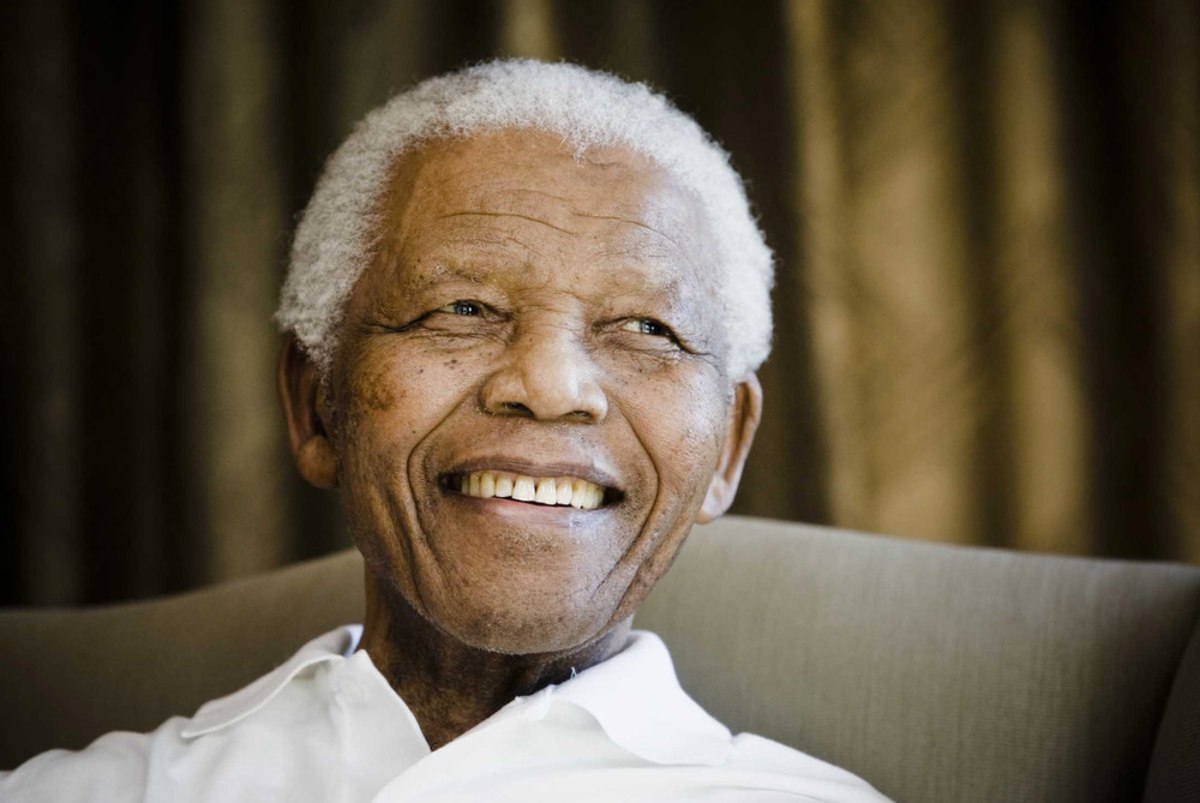
Nelson Mandela:
Throughout his life, Mandela was able to effect a great amount of change in South Africa, such as helping to end apartheid. He was also the first democratically elected president and first black president of South Africa.

Tuesday, December 3, 2013

TOW #11: The Future of Drones by Randy Bish (Visual Text)


     On Sunday, December 1st, Amazon announced a future plan to possibly use delivery drones – autonomous octocopters that would deliver Amazon packages to the consumer's doorstep. This news evoked a great and varied response. One such take is shown in this political cartoon by Randy Bish, an award-winning editorial cartoonist for the Pittsburgh Tribune-Review. Published in the Trib for a politically-interested audience, Bish's cartoon, "The Future of Drones", shows a negative response to Amazon's drone announcement. Through his straightforward diction and alarming juxtaposition in his drawings, Bish effectively causes readers to be doubtful about the use of drones for everyday purposes, and therefore he successfully conveys his negative opinion of the Amazon drone idea.
     Bish begins the cartoon by making the drone state: "I'm a drone." Not only is this a bit unexpected, but it first causes readers to truly consider the meaning of the word "drone". Instinctively, Americans think of the recent events in countries such as Pakistan, where American military drones were controversially dropping bombs on potentially innocent people. Therefore, the word "drone" automatically has a bad connotation. Bish goes on to write about the various functions of an Amazon drone, which seem to be rather mundane, until he draws in the aspect of the drones that readers probably thought of immediately when he writes that the drone could "blow your village to kingdom come". The matter-of-factness of this statement causes Bish's audience to do a double take. This then makes readers reconsider the idea of Amazon drones and makes them wonder if the drones truly are safe. This doubt that Bish evokes in readers shows that he has successfully conveyed his message that perhaps Amazon drones are not the best idea.
     The straightforward diction in Bish's cartoon is complimented by his juxtaposition in the drawings themselves. The readers' double take at the third panel is intensified by the fact that the drone is smiling. Also, the drone now sports what appears to be a machine gun, which strongly contrasts its innocent package in the previous two panels. The sudden appearance of a weapon causes Bish's audience to wonder how different an Amazon drone would be from a military drone, and they may begin to wonder if they would be safe with drones as a common sight in the skies. Again, the readers' doubt shows that Bish effectively demonstrated his negative opinion of the drones.
     Through matter-of-fact diction and surprising juxtaposition, Bish effectively evokes in his readers a feeling of doubt towards the use of drones in everyday activities. This doubt shows that Bish has successfully communicated his own negative opinion towards the announcement drones being used for delivery in the future.